Specialist counselling training · Live online
Live online qualification courses for counsellors and therapeutic practitioners, offering interactive, tutor-led learning with the same personal attention and group experience as in-person training.
Explore our three CPCAB accredited qualification courses, delivered through live online learning. Each offers a different focus for professional development, with interactive, tutor-led sessions and the same supportive learning experience as in-person training.
These summaries are a starting point, not confirmation of eligibility. Please request the current course information, entry criteria and accreditation details before making a decision.
Withdrawal and outstanding fees: For all three courses, students who withdraw before completing their course are liable to pay any outstanding course fees in full within 28 days of their withdrawal.
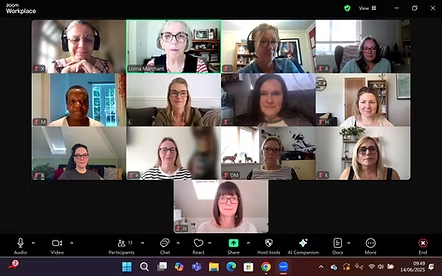
Our tutors bring over 20 years of experience across the counselling industry. Small learning groups allow personal attention and focused discussion, with space to reflect on your developing practice.
Our qualification courses are delivered live online through scheduled, tutor-led sessions. Students participate in real-time teaching, group discussions and experiential learning, creating an interactive and supportive environment.
Develop the knowledge, confidence and practical skills to establish a sound, ethical and effective supervision practice.
Our CPCAB Accredited Level 6 Certificate in Supervision is a nationally regulated qualification, delivered online across seven training weekends.
Designed for experienced counsellors and psychotherapeutic practitioners, the course provides the theoretical knowledge, practical experience and professional understanding needed to incorporate supervision into your existing practice.
Through a combination of theory, experiential learning, supervised practice and group work, you will develop your own coherent framework for supervision while exploring the ethical responsibilities involved in supporting other practitioners.
Please mention “Certificate in Supervision” in your email.
This course is intended for experienced counsellors who are either accredited by a professional body or eligible for professional accreditation.
It is designed primarily for psychotherapeutic practitioners, including counsellors, psychotherapists and psychologists, who wish to incorporate supervision into their professional practice.
Course information
The course explores the theory, ethics and practical application of supervision, helping you develop a sound and ethical approach to supervisory work.
You will learn how to negotiate effective working relationships with counsellors at different stages of their professional development, considering their individual needs, experience and level of practice.
A range of established supervision models will be explored, including:
ICT works predominantly with the Seven-Eyed Model, although you will be introduced to other approaches to help you identify the model that best fits your own practice.
The emphasis is on developing your chosen approach into a coherent and effective framework for supervision, rather than simply applying a model without reflection.
Teaching also supports your development as both an individual supervisor and a group supervisor. Course leader Lorna Marchant brings extensive experience in facilitating groups, supporting your understanding and practice of group supervision.
This qualification is designed for experienced counselling and psychotherapeutic practitioners who are ready to extend their professional work into supervision.
Applicants should be either accredited by a relevant professional body or eligible for accreditation.
The training is particularly relevant to:
If you are unsure whether your existing training and experience meet the entry requirements, please contact ICT to discuss your suitability.
As part of the course, you are required to complete a minimum of 15 hours of supervision practice.
This practice can take place through:
Where possible, ICT recommends gaining experience in both individual and group supervision to develop a broader range of supervisory skills.
You are also required to receive a minimum of 5 hours of consultative supervision during the course.
The teaching programme supports your development as both an individual and group supervisor, providing opportunities to explore and reflect on your developing supervisory practice.
The course is delivered fully online across seven training weekends.
The seven weekends provide structured teaching, experiential learning and opportunities for professional reflection and skills development.
Dates for the next academic year have not yet been finalised. Please contact ICT for further information about the training programme and availability of places.
The Certificate in Supervision is a CPCAB Accredited Level 6 qualification on the Regulated Qualifications Framework (RQF).
Assessment takes place internally through a portfolio of evidence demonstrating your learning, professional understanding and development of supervisory skills.
Your portfolio and assessment activities include:
CPCAB provides the assessment criteria and qualification information needed throughout your training.
For further information about CPCAB, visit www.cpcab.co.uk.
Course tuition fee: £1,850
A deposit of £250 is required to secure your place. Once the deposit has been paid, the remaining £1,600 tuition fee can be paid in monthly instalments.
CPCAB registration fee: £395
This is payable separately. Please contact ICT for confirmation of the registration fee payment deadline for the next course.
Total course fee: £2,245
The total comprises the £1,850 tuition fee and the additional £395 CPCAB registration fee. The £250 deposit forms part of the tuition fee and is not an additional charge.
Please contact ICT if you would like to discuss the available monthly payment arrangements.
Independent Counselling Training is a neurodivergent-friendly training centre, committed to supporting learners with different learning needs.
If you are autistic, have dyslexia, ADD, ADHD or other learning support requirements, please let us know so that we can discuss how best to support you throughout your training.
We encourage students to communicate their individual needs so that appropriate support can be considered.
Take the next step in your professional development and build the confidence, knowledge and skills to work independently as a psychotherapeutic counsellor.
Our CPCAB Accredited Level 5 Diploma in Psychotherapeutic Counselling (PCL5) is designed for qualified counsellors considering private or independent practice, or looking to consolidate and extend their previous counselling training.
Delivered exclusively live online via Zoom over 17 Thursdays, the course offers an accessible and supportive environment in which to develop the knowledge, skills and professional competencies required for independent practice.
The training prepares you to establish your own independent practice, whether as a private practitioner or as a senior practitioner working within an organisation.
Our integrative approach combines theory, experiential learning and practical skills development, helping you deepen your understanding of the therapeutic relationship and work confidently with increasingly complex client needs.
Call Lorna Marchant on 07795 106498 or email us to discuss your application.
This course is designed for qualified counsellors who wish to develop the competencies needed for independent or private practice, or progress towards a senior practitioner role.
You must hold a minimum of a Level 4 Diploma in counselling, including placement experience involving at least 100 client hours as a volunteer counsellor.
Course information
This course supports the development of professional knowledge, therapeutic skills and competencies required to practise independently and responsibly.
The programme explores the challenges and responsibilities of independent counselling practice, including:
At Independent Counselling Training, our approach is integrative. We see integration as bringing together our knowledge, skills and understanding through the therapeutic relationships we establish with our clients.
You will be introduced to different theoretical approaches and explore how they can be integrated into a coherent and effective way of working.
The course incorporates experiential learning alongside skills practice and theoretical study, encouraging reflection, personal development and professional growth.
The CPCAB Level 5 Diploma in Psychotherapeutic Counselling (PCL5) meets the competencies of SCoPEd Column B.
With sufficient practice hours and subject to the relevant membership body's requirements, this qualification can provide a route towards membership and accreditation with professional counselling associations on registers accredited by the Professional Standards Authority (PSA), such as:
CPCAB has also mapped this qualification to UKCP requirements. When combined with the CPCAB Diploma in Therapeutic Counselling, it can contribute towards a pathway for individual accreditation with the UK Council for Psychotherapy (UKCP) as an accredited psychotherapist.
Professional registration or accreditation is not automatic and depends on meeting the relevant organisation's requirements, including any additional practice, training or assessment criteria.
For further information about SCoPEd Column B and the qualification, visit CPCAB's qualification guidance .
Applicants must already be qualified counsellors with a suitable foundation of training and practical experience.
As a minimum, you must have completed:
The course is particularly suitable for practitioners looking to move into private practice, consolidate previous learning or develop the skills needed for more advanced therapeutic work.
If you are uncertain about your eligibility, please contact ICT to discuss your existing qualifications and experience.
Personal counselling: Minimum 40 hours
You must have completed at least 40 hours of personal counselling by the end of the course.
Hours undertaken before the course begins can count towards this requirement. However, a minimum of 10 hours must be completed during the training year itself.
Client work: Minimum 60 hours
During the course, you are required to complete at least 60 hours of formally contracted one-to-one counselling, including client assessment.
Client work can take place either online or in person.
Clinical supervision
You must receive appropriate clinical supervision throughout your counselling work, either individually or as part of a supervision group.
Supervision may be undertaken online or in person and must meet the supervision ratio requirements of your professional membership body.
These practice requirements are an important part of developing safe, reflective and professionally responsible independent practice.
The diploma is delivered exclusively live online via Zoom, helping make professional counselling training more accessible.
Teaching takes place across 17 Thursdays.
Teaching hours: 9:30am – 4:30pm
Dates for the next academic year have not yet been finalised. Please contact ICT for further information about the upcoming course timetable.
All sessions take place live online, allowing students to participate in theory, skills development and experiential learning from their own location.
Course tuition fee: £1,950
A deposit of £250 is required to secure your place on the course.
Following payment of the deposit, the outstanding tuition fee of £1,700 can be paid in monthly instalments.
CPCAB registration fee: £395
This fee is payable separately. Please contact ICT to confirm the registration fee payment deadline for the next course.
Total course cost: £2,345
The total includes the £1,950 tuition fee and the additional £395 CPCAB registration fee. The £250 deposit is included within the tuition fee.
Important payment condition: If you choose to leave the course early and are paying by monthly instalments, the outstanding course fee must be paid in full within 28 days.
Please contact ICT for further information about instalment arrangements and payment options.
Students have described their experience of this course as:
"Incredible", "encouraging", "nurturing", "supportive" and "motivating".
One student shared:
"This course has given me the confidence boost to be in private practice."
At ICT, we aim to provide a supportive learning environment where students can build their confidence and develop as independent practitioners.
Independent Counselling Training is a neurodivergent-friendly training centre, committed to supporting learners with different learning needs.
If you are autistic, have dyslexia, ADD, ADHD or other learning support requirements, please let us know so that we can discuss how best to support you throughout your training.
We encourage students to communicate their individual needs so that appropriate support can be considered.
Develop the knowledge, practical skills and confidence to facilitate effective, engaging and inclusive groups across a range of professional settings.
Our Level 6 Diploma in Group Facilitation is an innovative professional development course designed for counsellors, supervisors, counselling tutors and coaches who already facilitate groups or are interested in developing their group facilitation skills.
Whether you are looking to broaden your therapeutic portfolio or develop a specialist area of practice, the course supports you in becoming a knowledgeable, ethical, integrated and reflective group facilitator.
Through a combination of theory, experiential learning, group skills practice and critical reflection, you will develop the confidence, competence and professional judgement to facilitate groups autonomously across diverse settings.
The course consists of seven tutor-led, two-day workshops delivered live online on Fridays and Saturdays between September 2027 and March 2028.
Please mention “Diploma in Group Facilitation” in your email.
This course is designed for qualified counsellors, supervisors, counselling tutors and coaches who are already running groups or would like to begin facilitating groups in their professional work.
You should be a qualified counsellor and/or coach, have been qualified for at least one year and enjoy learning through experience, reflection and professional discussion.
Course information
The course aims to support counsellors and coaches in developing the knowledge, practical skills and confidence required to facilitate effective and engaging groups.
You will explore the history and development of group work, examining the contributions of influential practitioners and theorists, including:
Alongside historical perspectives, the course introduces more contemporary theories that help explain the processes and relationships within groups.
These include:
Throughout the training, you will be encouraged to critically analyse group theory, explore research into group work and develop an understanding of your own use of self within the group context.
The course places particular emphasis on developing effective, inclusive and ethical group processes, regardless of the type of group you facilitate.
By the end of the programme, you will have developed a knowledgeable, integrated and reflective approach to group facilitation, alongside greater confidence in exercising professional judgement autonomously.
The diploma is intended for practitioners who want to enhance their therapeutic portfolio and develop specialist skills in group facilitation.
The published entry expectations are:
The course is particularly relevant for counsellors, supervisors, counselling tutors and coaches who wish to expand their professional practice into group work.
You do not need to already be running groups to express an interest, although you will need to gain practical group facilitation experience during the course.
If you would like to discuss whether your qualifications or professional experience are suitable, please contact the ICT team.
To successfully complete the diploma, you must provide evidence of practical experience facilitating groups and receiving supervision specific to group facilitation.
Group facilitation experience: Minimum 12 hours
You will need to complete and evidence at least 12 hours of group facilitation experience.
This provides opportunities to apply theoretical learning, develop practical facilitation skills and reflect on your work with groups.
Group facilitation supervision: Minimum 7 hours
You must also complete at least 7 hours of supervision specifically focused on your group facilitation practice.
These requirements support the development of ethical, reflective and professionally responsible group facilitation.
The course is delivered through seven tutor-led, two-day workshops, taking place monthly on Fridays and Saturdays.
All workshops are delivered live online, beginning in September 2027 and concluding in March 2028.
Course dates 2027–2028:
Each workshop incorporates a combination of:
The live online format allows students to engage with tutors and fellow practitioners while developing their understanding of group dynamics through practical group experiences.
As this is a Level 6 Diploma, students are expected to engage actively in reading, research and independent study throughout their training.
There are several essential books to read alongside the course.
Once enrolled, you will receive a scheme of work identifying the recommended reading in relation to individual workshop topics and areas of study.
The most important books will be highlighted within the course reading list.
Your independent reading and research will support:
Assessment is completed through an internally assessed portfolio of evidence demonstrating your knowledge, reflective practice and group facilitation skills.
The assessment requirements include:
You must also evidence your required practical experience, including 12 hours of group facilitation and 7 hours of group facilitation supervision.
The assessment process encourages you to integrate theory, practice, research and critical reflection into your developing professional approach.
The proposed CPCAB Level 6 qualification remains subject to formal approval.
Course tuition fee (2027): £1,850
Proposed CPCAB registration fee: £280
Total including registration: £2,130
A non-refundable deposit of £350 is required to secure your place.
The deposit forms part of the tuition fee, leaving £1,500 of tuition fees outstanding after payment.
Individual instalment plans can be agreed to help spread the remaining tuition costs.
Independent Counselling Training is an independent training provider and does not receive government subsidies or offer student loans for course fees.
However, flexible instalment arrangements are available and can be discussed individually.
Please contact ICT for further information about payment arrangements and the current CPCAB approval and registration status.
Independent Counselling Training is a neurodivergent-friendly training centre, committed to supporting learners with different learning needs.
If you are autistic, have dyslexia, ADD, ADHD or other learning support requirements, please let us know so that we can discuss how best to support you throughout your training.
We encourage students to communicate their individual needs so that appropriate support can be considered.
Email us with the course you are considering, a little about your qualifications and experience, and what you would like to develop. We can discuss suitability and the current course information with you.
info@independentcounsellingtraining.orgLooking for shorter professional development rather than a full qualification? Explore CPD workshops and events.